FAQ
What is a Flow Device?
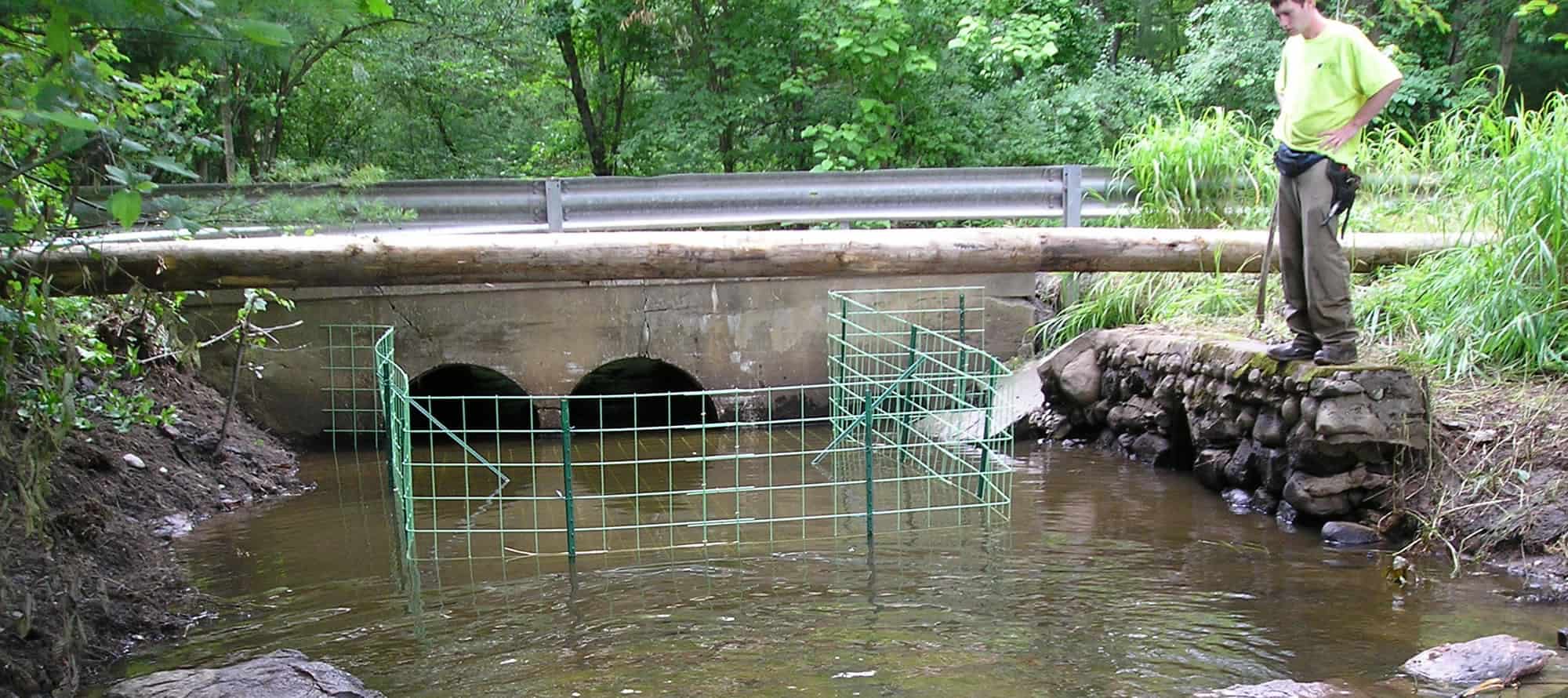
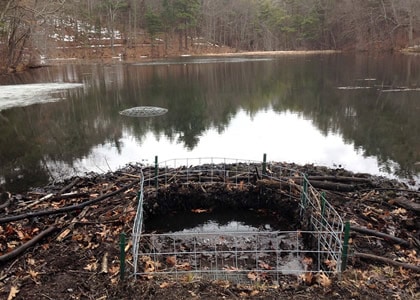
A flow device is a system that either prevents or controls beaver damming activity to control beaver related flooding problems. It may be a specially designed fence system to protect a road culvert, or a piping system to control the water level in a beaver pond. (See Flexible Leveler, Trapezoidal Fence, Cylindrical Fence)
Why Use a Flow Device?
Flow devices offer year-round protection from property damage. They protect human health and safety, save time, save money, and function for many years. In addition, a flow device allows beavers to create and maintain our ecologically valuable wetlands. They are proven to be long term solutions to beaver related conflicts that benefit both man and the environment. In our experience most beaver problems can be solved with flow devices in a long term, cost effective manner.
How Do Flow-Devices Work?
Highway and railroad culverts are very common damming sites because to a beaver a roadbed with a culvert looks like a ready-made dam with a hole in it. Properly designed culvert fencing will both decrease the stimulus for beaver damming and make it more difficult to dam. This will cause beavers to leave the culvert alone.
Where some water is tolerable but cannot rise above a certain level without threatening adjacent property, the size of a free standing beaver dam and pond can frequently be controlled with well-designed and installed beaver dam pipes. Beavers are stimulated to build their dams by the sound or feel of running water. Well-designed dam pipes create a permanent leak in the beaver dam and prevent beavers from detecting the flow of water into the pipe.
Are Flow Devices High-Maintenance?
Any manmade device exposed to the elements requires some maintenance. While our flow devices are designed to be very low maintenance, the little maintenance that is required is very important.
Beaver dam pipes should be inspected each spring for winter ice damage or if the pond level rises unexpectedly. Culvert fences should be inspected three to four times a year to remove any accumulated stream debris from the fence. Typically this is done after autumn leaves, spring runoff, and large debris-producing storms. This maintenance can be done by one person and usually requires less than fifteen minutes per cleaning. When this routine maintenance is performed as recommended, the flow device should remain effective for many years.
Because we are committed to the success of our installations, Beaver Solutions TM offers an optional maintenance plan at a very low-cost.
Why Not Relocate the Beavers?
If a beaver must be removed from a conflict site outside of trapping season it must be killed in a humane manner. It is against Massachusetts law to relocate wildlife. This is because many animals that are removed from their home areas (including beavers who are very territorial), suffer and die. In addition, relocating wildlife can just transfer the problem to someone else's property and can contribute to the spread of wildlife disease.
What About Trapping?
Beaver Solutions TM offers licensed beaver trapping services. Trapping to remove all the problematic beavers is recommended for areas where no beaver activity can be tolerated. However, it has drawbacks which include: it is often only a short term solution as new beavers can recolonize the habitat, the beavers must be killed rather than relocated, and the elimination of the beaver colony results in the loss of the valuable wetland habitat. (See Beaver's Benefits).
Are Beavers Dangerous?
Beavers are typically timid and shy animals who prefer to remain away from humans in the security of the water. They will slap their tails on the water to try to frighten enemies away. However, to protect their home territories they may attack an unrelated beaver or a perceived enemy who enters their territory.
|